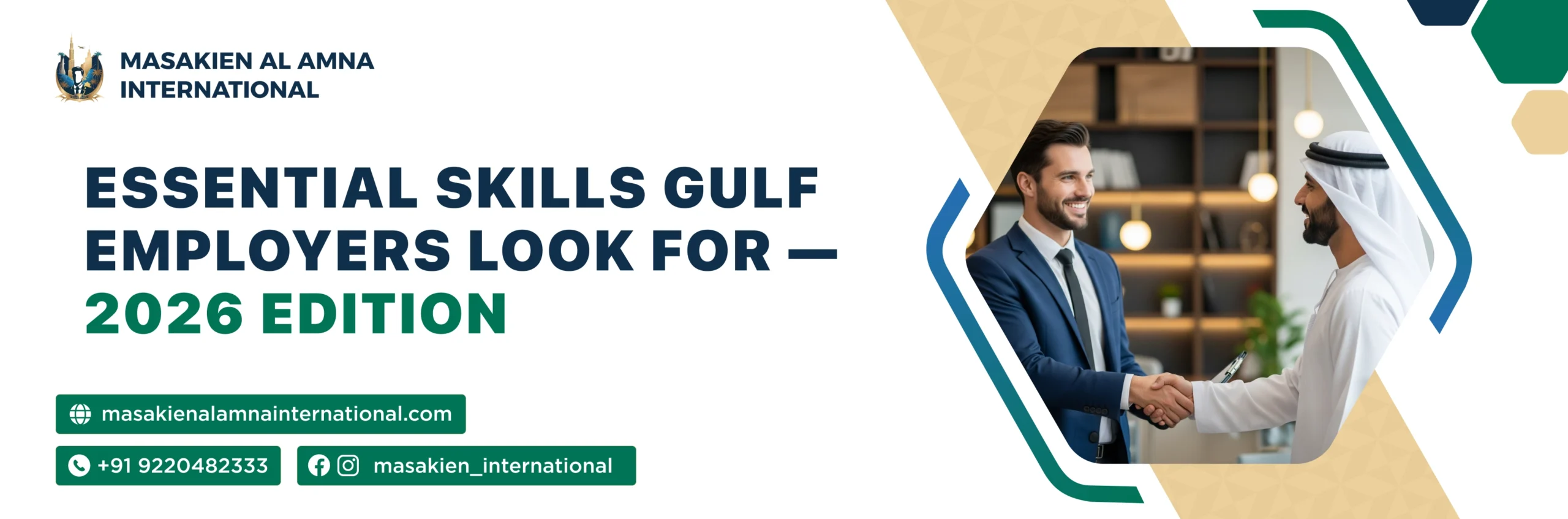
Essential Skills Gulf Employers Look For — 2026 Edition
The Gulf job market experiences rapid expansion due to economic growth and industrial development. The United Arab Emirates, Saudi Arabia, Qatar, and Kuwait dedicated substantial financial resources toward developing their construction and healthcare, tourism, and technology sectors. The new developments bring multiple employment opportunities that will be available to international workers. The number of people who want to work in these positions has grown every year.
Gulf employers today search for candidates who possess more than just essential qualifications. They now seek applicants who possess both technical expertise and professional competencies and cross-cultural teamwork abilities. Employers now value employees who possess both degree qualifications and communication, teamwork, and flexibility skills. Organizations seek employees who will drive business expansion while working effectively with teams from different cultural backgrounds.
Gulf jobseekers must understand what employers want from them because this knowledge serves as an essential requirement for their employment search. Candidates often lose their chances to secure job positions because they concentrate on developing their technical abilities without developing their complete professional competencies. Applicants who understand employers’ essential requirements will be able to develop the necessary skills and improve their presentation skills for the recruitment process.
This blog will examine the key abilities that Gulf employers will seek in 2026. These skills provide candidates with a competitive advantage that enables them to secure employment opportunities. The process of developing these skills will enable individuals to obtain employment and establish a successful professional path in the Gulf area.
Strong Communication Skills
Gulf workplaces consider communication to be a crucial skill because companies employ staff members from various countries. Through precise communication, the system establishes a shared understanding that enables each person to fulfill their role effectively while avoiding potential errors.
Gulf region companies use English as their main language for work. Employees who can speak and write English confidently have better job opportunities and career advancement. Effective communication requires people to listen attentively to others while they speak and to answer back with professional responses during workplace conversations.
The need for communication skills becomes more essential in industries that provide customer service to customers because of their work in hospitality, retail, and aviation. Employees must treat customers with respect while explaining their services in simple terms. A combination of friendliness and professionalism in communication helps to develop a good first impression of the organization.
Employer organizations want candidates who demonstrate their ability to speak well during meetings and presentations and in their regular work activities. Organizations trust employees with strong communication abilities to lead teams and manage group activities. The Gulf region requires workers to develop this skill because of its importance for their professional success.
Technical and Job-Specific Expertise
Gulf jobs require technical expertise as their primary qualification standard. Employers expect candidates to have strong knowledge and practical experience in their specific field. Job-specific certifications and professional training programs help candidates increase their chances of getting hired. Many Gulf companies prefer candidates who already have the skills needed for the job. The company benefits because this process decreases both training duration and training costs, which they need to spend on their new employees.
People need to acquire both practical experience and theoretical knowledge because both elements are important for their development. Employers search for employees who possess the ability to solve actual workplace problems while working effectively. The candidates who possess practical work experience will learn to adjust to their new job.
Technical workers need to maintain their learning abilities throughout their careers. New tools and technologies emerge in the industry to create constant changes. Employees who maintain regular skill development and knowledge acquisition become essential assets to their employers while enjoying better career advancement opportunities.
Digital and Technology Skills
Technology now changes business operations throughout the Gulf region. Companies use digital systems to handle project management tasks, communication activities, and data analysis operations. Employees who understand these tools can work more efficiently and contribute to modern business operations.
Basic digital skills such as using spreadsheets, email systems, and online collaboration platforms have become essential requirements for many professions. Even roles that were traditionally manual are becoming more technology-driven. Workers who are comfortable with digital tools complete their tasks at a quicker speed while making fewer mistakes.
Organizations are now implementing advanced technologies, which include automation, artificial intelligence, and cloud computing. Employees who understand these technologies will gain an edge over their competitors when applying for jobs. Digital literacy has become an essential skill required for professional success.
Employers appreciate workers who are open to learning new technologies. Businesses need their employees to develop digital skills since these abilities enable organizations to achieve operational efficiency and maintain their market position. As technology continues to advance, employers will require digital skills from their employees for all future job openings.
Adaptability and Flexibility
The Gulf workplace environment is often dynamic and fast-paced. Employees must be able to modify their work practices when new tasks emerge or their work schedule changes, or their job duties shift. Employers consider workers with strong adaptability skills to be their most valuable assets.
Flexibility requires individuals to learn new skills while accepting extra duties that may arise. Companies prefer workers who demonstrate self-motivation and choose to develop their existing skills. This mindset enables organizations to function effectively during both peak times and tough challenges.
Another aspect of adaptability is working with people from different cultures. The Gulf workforce includes professionals from many countries who all bring their own distinct work methods and cultural customs. Employees who respect cultural diversity create a more positive and productive work environment. Check out our latest blog post on Avoid These 10 Visa Scams Prevalent in GCC Job Market
Problem-Solving Ability
Problem-solving functions as a critical organizational ability that enables organizations to achieve their goals through effective solutions. Employees who identify workplace problems and develop effective solutions for these issues enable organizations to boost their operational efficiency. Employers prefer employees who show initiative because their employees will complete tasks without needing supervision.
The daily operations of multiple industries, including construction, logistics, and facility management, face the risk of unplanned challenges. Workers who can analyze the situation quickly and respond effectively help prevent delays and financial losses. This makes problem-solving a highly desirable ability.
Critical thinking and creativity are essential for solving problems. Employees must evaluate different options and choose the most effective solution. The ability to make better decisions results in business operations that run without interruptions. Supervisors trust professionals who display strong problem-solving abilities. The employees will receive more responsibilities until they reach leadership roles. The skill has the potential to advance your career prospects.
Time Management and Discipline
The process of time management constitutes a basic requirement that professionals need when they work in fields that require them to meet fixed schedules. Gulf companies handle extensive projects that need precise scheduling and execution. Workers who master time management skills maintain operational efficiency throughout their workday.
The process of task prioritization, combined with timely assignment completion by workers, leads to increased productivity for their organizations. Proper time management practices help people work more effectively while reducing their anxiety. Professionals who can manage their tasks independently without needing assistance receive appreciation from employers.
Professional behavior requires discipline and punctuality as essential components. Employees who arrive at work on time, follow company rules, and show consistent work standards develop a positive professional image. Employers prefer workers who demonstrate reliability for crucial assignments and projects. Employees who demonstrate discipline and effective time management build trust with their managers. Employees who exhibit reliability will receive promotions and career advancement opportunities. The Gulf region requires these skills to develop a successful professional path.
Customer Service Skills
Customer service functions as a critical component that supports industries that include hospitality, tourism, aviation, and retail operations. The Gulf countries require businesses to provide excellent service because the region receives millions of international tourists each year. Employees must conduct their interactions with customers by showing both professional and respectful behavior.
Workers who listen carefully to customer needs and respond politely create positive experiences. Good customer service creates solutions to problems while developing enduring relationships with customers. Companies depend on their expert staff members to protect their brand image during times of fierce market competition.
Workers who interact directly with customers need to maintain both composure and understanding throughout all customer interactions. The way a business handles customer complaints through its professional response methods creates a positive impact on its overall image. This competence demonstrates both emotional intelligence and professional behavior.
Employers highly value professionals who possess exceptional customer service abilities. The performance of these employees directly impacts customer happiness while helping the business develop. Companies actively pursue candidates who will effectively represent their brand image.
Teamwork and Collaboration
Most Gulf workplaces require teamwork because project execution needs multiple departments to work together. Employees must work together with their coworkers to reach shared objectives while completing their duties. Effective teamwork leads to better team communication, which decreases conflicts that arise in work environments.
Workers who assist their coworkers while distributing their expertise create a work environment that fosters success. Teams achieve better results when members work together because they can create new ideas and find solutions to challenges. Organizations experience advantages when their personnel share their individual strengths with others.
Teamwork requires team members to show respect for their colleagues while they learn to appreciate various viewpoints. The Gulf region is home to diverse cultures, which create a need for proper workplace etiquette. Employers value candidates who possess strong teamwork skills because those candidates facilitate effective project completion. Professionals who demonstrate effective teamwork skills become important assets to their organizations. The Gulf job market provides better employment opportunities to employees who work well in teams.
Conclusion
The Gulf job market in 2026 is becoming increasingly competitive and skill-driven. Employers want to hire professionals who possess technical skills and effective communication, adaptability, and teamwork competencies. Candidates who develop these skills have a greater chance of securing high-quality job opportunities.
Job seekers should concentrate on enhancing their professional expertise, together with their work-related conduct. The international employment market values candidates who adopt this method of development. Contact us as gulf employers provide their hiring expectations, which help applicants build better job preparation methods. Workers who enhance their communication, digital literacy, and problem-solving competencies will gain a competitive advantage during recruitment. These skills are essential for long-term success in the Gulf workplace.
Skill development represents one of the most beneficial career investments for individuals who aim to work in Gulf countries. Professionals with strong skills will secure employment while building their careers and maintaining stability in global employment markets.