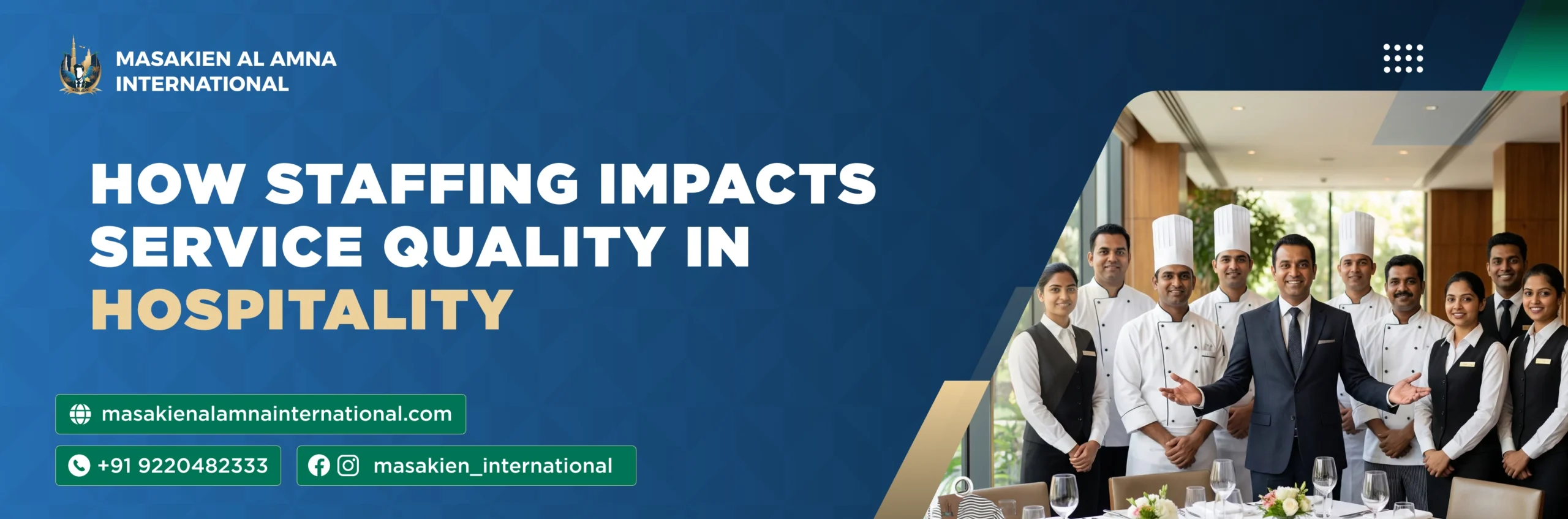
How Staffing Impacts Service Quality in the Hospitality Industry
Quality of service in hospitality is the main factor that determines whether a business is just average or a great one. Customers will probably forget about the decorations or the food, but never their treatment. A great guest experience is always supported by a well-trained and well-staffed team that is able to provide the service with the same level of care and consistency. Staffing is not only about personnel; it also affects guest satisfaction, company reputation, and eventually business success, all positively or negatively, depending on the company’s skills.
A hotel, restaurant, resort, or any other kind of hospitality business operates in a fast environment where customer satisfaction is of primary importance. A mismatch in requirements or a change in personnel attitudes can lead to poor service quality. This blog talks through the impact of staffing on service quality in hospitality and the necessity of investing in the right workforce for sustainable growth.
Adequate Staffing Levels Ensure Smooth Operations
The service quality in hospitality directly depends on having the correct number of staff present at the same time. A shortage of staff at the front line leads to an unhappy guest experience due to long waiting times, unfairly rushed service, and very stressed-out employees. If the guests are lined up for a long time or waiting for the room service or assistance, their experience becomes negative, even if other aspects of the hotel are taken care of brilliantly.
Right staffing ensures that every unit is able to work without any unwanted stress caused by others. Front-desk employees can give their full attention to the reception of guests, housekeeping is allowed to keep up with their standards of cleanliness, and baristas and waitstaff can quickly serve drinks and dishes. When the burden is off, the employees are more considerate and responsive, and this results directly in higher guest satisfaction.
In the opposite situation, a hotel might hire too many staff, resulting in unused resources leading to an increase in operating costs and no corresponding rise in the level of service. An effective staffing policy would be one that smartly splits your workforce between those who are available for customers and those who are uninterrupted.
Skilled and Trained Staff Elevate Guest Experience
The people who make up the well-trained team know the service procedures, communication etiquette, and the techniques for solving problems. Hence, they are working to be professional in every interaction with the guests. Training gives the employees the power to perform all the regular tasks and unpredictable ones efficiently.
The trained personnel can foresee the requirements of the guests and not merely respond to their demands. A frontline receptionist, for instance, can pinpoint the guest’s likes and dislikes, while a restaurant waiter will not hesitate to suggest dishes that he or she knows. These are not grand but very significant and frequent moments that provide the customers with a special service that they will appreciate and recollect.
Regularly conducted training gives impeccable service through the whole workforce, shifts, and divisions. The situation where all the workers are up to the same performance level and are working with the same procedures means that the customers will get the same treatment no matter who is at the service counter. This very quality of service builds up trust in the brand and leads to turning one-time visitors into regular customers.
Employee Attitude and Motivation Influence Service Delivery
The hospitality industry is one where service is very much emotional and human-oriented. A warm smile, a nice tone, and an honest desire to help can all work together to lift the guest’s satisfaction level remarkably. Employee recruitment and placement have a direct effect on morale, which is one of the factors that determine the quality of the service. Well-motivated staff are more involved, attentive, and light-handed in the delivery of quality service.
Do not hire more staff than you can afford if you want to have a good customer service practice. Moreover, let the employees take breaks. Otherwise, their physical and mental outlines will soon lead them to burnout or irritation. The stressed personnel will not only be the ones who do not serve the guests, but also the ones who will be the least patient with them soon. There is a danger that even very little negative contact will, from the guests’ side, change their opinion of the brand negatively.
It has been proven that company cultures with supportive staffing policies at their core will reap the benefits of happier and more loyal employees. When the workforce feels appreciated and not taken for granted, the good vibe is, in turn, passed on to the hotel guests. Increased, satisfied employees, who feel their work is important, can provide better quality and customer-oriented service, become more collaborative, and create a friendlier atmosphere in the hospitality sector. Check out our latest blog post on Common Marketing Mistakes Hospitality Businesses Should Avoid
Staffing Consistency Enhances Service Reliability
It is no secret that high staff turnover is a frequent problem in the hotel sector, and it directly affects the level of service provided. The constant influx of new staff disrupts the flow of operations, lowers the speed of service delivery throughout the hotel, and forces the owner to incur extra training costs.
In the case of stable staffing, all employees involved will have the opportunity to develop their skills, understand what guests want, and work effectively with their coworkers. Senior employees cultivate friendships with regular guests, thus bringing in more personalized service. This atmosphere of realization and acknowledgment leads to the guest becoming more trusting and eventually more satisfied.
Not only that, but also the skilled employees have the ability to manage the busiest times and make the most stressful situations less so. Their being at ease with the workflows and the systems leads to fewer mistakes and no delays.
Department-Specific Staffing Influences Overall Guest Satisfaction
Every single department within a hotel has its own particular way of affecting the customer experience. The front office staff is responsible for the first and last impression, housekeeping guarantees comfort and hygiene, the food and beverage department provides dining experiences, and the maintenance staff ensures safety and operation of the facility. If one of the departments is understaffed, it can ruin the whole guest journey.
For instance, if the customer service at the front desk is phenomenal, but there is a lack of staff in the housekeeping department, then the rooms will be dirty, and the guests will be unhappy. Similarly, restaurants with staff shortages might have great food but very slow service.
Proper staffing per department guarantees that the quality standards are met at every touchpoint. When the full teamwork is done, guests are treated to smooth service from the time they arrive until they leave. This complete approach makes the overall hospitality experience even better.
Professional Recruitment Raises Service Standards
Recruiting the right people is equally important as the quantity of staff. Hotels and other businesses in the industry that hire workers with the right mindset, good communication skills, and a service-oriented attitude, of course, give better service quality. Professional recruitment ensures that the selected candidates not only fit the brand’s service values but also the operational needs.
Hiring unqualified or unsuitable employees might save money in the short run, but it very often leads to long-term service problems. Strategic recruitment concentrates on quality rather than quantity.
Working with experienced staffing agencies might help hotels and restaurants find the right staff quickly. Professional recruitment gives all that is related to hiring fewer risks, better workforce stability, and service consistency support throughout all departments.
Conclusion
One of the most important factors in the hospitality industry influencing the quality of service is staffing. The different aspects of staffing, such as adequate workforce levels and skilled training, employee motivation, and staffing continuity, will all directly impact the brand perception of the guests. Contact us as ultimate service is not a chance event; it is the outcome of the well-planned staffing strategies and the top management that puts people first.
The hospitality industry that takes the right staffing route will quickly reap the benefits in the form of better guest experiences, more positive reviews, and long-term loyalty, thus gaining a competitive advantage. In a sector where the service is the main determinant of success, the quality of staff will always determine the quality of service provided.