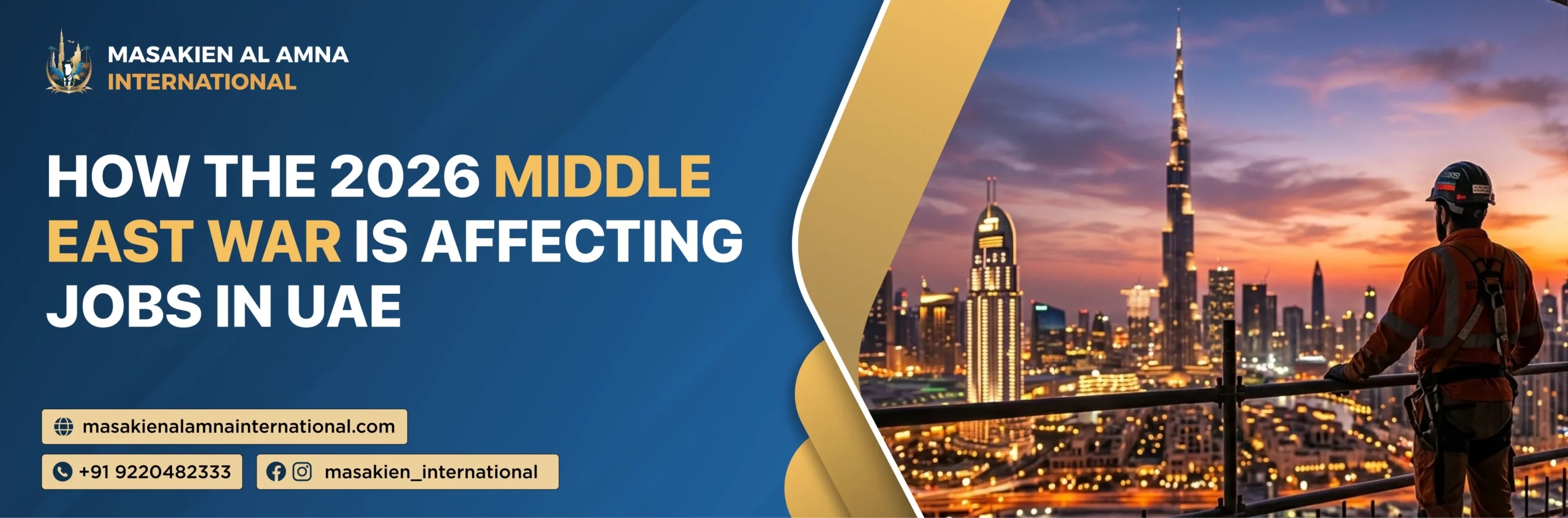
How the 2026 Middle East War Is Affecting Jobs in UAE
The 2026 Middle East war has created major economic uncertainty, which affects both global and regional economies throughout the Gulf region. The UAE maintains economic ties with its neighboring countries, which makes the country vulnerable to geopolitical events even though it stays neutral in the ongoing conflict. The instability affects industrial sectors that rely on international trade, tourism, and foreign investments to conduct their business operations.
The UAE job market experiences operational changes because of existing difficulties that affect different industries across the country. Some sectors are experiencing slowdowns, while others are adapting to new demands and opportunities.
1. Hiring Slowdowns Across Multiple Industries
The ongoing war has created uncertainty, which has caused many UAE companies to decrease their hiring activities. Businesses now prefer to limit their financial expenditures because they do not plan to increase their employee base. The job market becomes more competitive because the number of job vacancies has decreased across multiple industries, including retail and logistics, and corporate services.
Companies experience two main effects, which include reduced hiring and postponed recruitment decisions until there is a safer period to proceed with hiring. Organizations prefer to use their current employees who already work for the company by delegating new responsibilities instead of hiring additional staff members. This strategy enables them to keep their daily operations running smoothly while managing their spending, but it results in decreased employment chances for new job applicants.
2. Impact on Tourism and Hospitality Jobs
The tourism and hospitality sector in the UAE depends on international visitors for its business operations because this dependency creates a risk during times of military conflicts. Safety concerns and travel restrictions have made many tourists decide to either postpone their trips or cancel their plans to visit the region. This situation has resulted in a significant decrease in hotel bookings and airline reservations, together with all forms of tourism activities.
The sector experiences decreasing demand, which forces businesses to change their operations for effective cost management. To achieve their profit goals, hotels and restaurants, as well as travel companies, will begin to decrease their employee count while they stop hiring new staff. The current employment situation creates difficulties for job seekers who want to find their first job or short-term work in the hospitality and tourism sector.
3. Construction and Infrastructure Jobs Facing Uncertainty
The construction industry, which is one of the largest employers in the UAE, is also facing uncertainty due to the war. Investors are becoming more cautious about funding new projects, as economic instability makes it difficult to predict future returns. The hesitation will result in two outcomes, which include postponed project initiation and decreased construction job openings.
The construction projects that currently exist will encounter difficulties because of two factors, which include increasing material expenses and disruptions occurring in supply chains. The major government-supported initiatives will probably progress according to their schedule, whereas smaller private initiatives will experience delays or need to decrease their scope. The current situation will result in job stability for some positions, while other roles will experience negative effects from the decline in investment activities.
4. Rise in Oil Prices Creating Mixed Effects
The present conflict results in unpredictable changes to worldwide oil prices, which mainly increase because of worries about oil supply. The UAE government receives additional revenue from increased oil prices, which it uses to support public infrastructure projects that stimulate economic growth. The energy, infrastructure, and public service sectors will create new job openings for workers.
Rising oil prices cause inflation, which makes all products and services within the economy more expensive. Higher business operating costs will prevent companies from expanding their workforce and business activities.
5. Shift Towards Remote Work and Business Continuity Plans
The organization establishes this framework to protect its essential business functions during times of geopolitical unrest. Employees are increasingly working from home or flexible locations, which establishes business continuity for their clients.
The digital skills that companies need now match the increased need for technology-focused job positions. Companies are now spending money on remote work tools and platforms, which creates new employment opportunities for IT, cybersecurity, and digital communication positions. Professionals who possess digital technology skills and flexibility will find better employment opportunities in the current work environment.
Check out our latest blog post on Gulf War Situation 2026: Indian Workers Move to UAE Now?
6. Decline in Business Confidence and Investments
The ongoing military conflict, together with existing geopolitical disputes, creates conditions that result in decreased business confidence because investors become more protective of their investments. Companies in the region face operational challenges because economic uncertainty prevents them from making strategic decisions about their projects and business growth. The United Arab Emirates needs to change its current conservative business approach because it hinders economic development and job creation efforts.
During investment decline periods, which affect their business activities, companies choose to maintain operational stability instead of executing their growth strategies. The result creates a workplace that offers fewer job openings and limits employees from developing their careers. Employees experience postponed salary increases and promotion opportunities because companies need to secure their financial position during periods of uncertainty.
7. Changes in Visa Processing and Recruitment Trends
The ongoing military conflict has changed both the recruitment practices and the visa processing systems used in the UAE. Companies that depend on international talent for their workforce are now implementing stricter procedures to select candidates for employment. Global mobility challenges, together with administrative recruitment delays, have made the recruitment process more challenging and time-consuming for organizations.
International job applicants will face these specific delays, which will extend their waiting period until they receive both visa approval and employment confirmation. Recruitment agencies have changed their hiring process to give preference to local talent needs and advanced, skilled professionals who possess specialized expertise. Candidates who wish to find employment during this time period must possess thorough knowledge of job market processes, together with the ability to create job applications.
8. Strong Demand for Skilled Professionals Still Exists
The war has created multiple challenges, yet skilled professionals continue to fulfill their essential roles in important sectors that drive the development of the UAE economy. The information technology, healthcare, engineering, and finance industries maintain their operational expansion needs to hire experts who possess particular skills. Employers are focusing on hiring candidates who can add immediate value to their organizations.
The trend demonstrates that professionals need to acquire new skills while they need to keep learning about changes in their respective fields. Professionals who possess advanced certifications, together with technical skills and applicable work experience, achieve superior job market prospects. Skilled professionals who match their abilities to current job market requirements can discover reliable job options that provide them with professional satisfaction even during difficult periods.
9. UAE’s Economic Resilience and Stability
The resilience of this system enables the employment market to operate normally despite the existence of regional obstacles. The government funding initiatives, together with its extensive development initiatives, create a favorable environment that drives economic progress while attracting overseas investments. The current stable conditions generate trust among employers and job applicants who perceive job security throughout these unpredictable periods.
The current economic advancement strategy of the UAE requires digital technologies and environmental sustainability solutions, and smart urban development systems as essential components for successful economic growth. Future-ready skills development enables job seekers to access valuable career opportunities. Professionals who maintain their capacity to modify their behavior while pursuing new job opportunities will achieve their professional objectives.
Conclusion
The 2026 Middle East war has created employment instability in the UAE through job market changes that affect numerous sectors. UAE professionals should develop their skills while acquiring industry knowledge and learning to adapt to various job responsibilities and work environments. Contact us, as the UAE will maintain its employment growth through economic development and strategic investment despite facing temporary obstacles. Individuals who establish appropriate goals and maintain the correct attitude will find success in their efforts to adapt to the new circumstances while building secure futures.